A blender and a bag: the lowest-cost milk maker is the one you own
Every milk maker is a blender and a filter in one box. If you own a blender, the only part you are missing is the filter, and a nut milk bag is that filter for the price of a bag of almonds. Soak, blend, pour, squeeze. It asks for your hands and makes a mess of the sink. In return you control the texture completely, and after a month you know whether a machine is worth buying.
The method
Four steps, five minutes once the nuts have soaked. The ratios guide has the quantities for each milk.
1
Soak
Almonds for 8 hours or overnight; cashews for 2; oats for none at all. Drain and rinse. Soaking softens the nut for the blender and rinses off the dust that makes milk bitter.
2
Blend
One cup of nuts to three or four cups of water, a pinch of salt, on high for 45 to 60 seconds. Oats for no more than 30 seconds, cold, or the milk goes slimy.
3
Strain
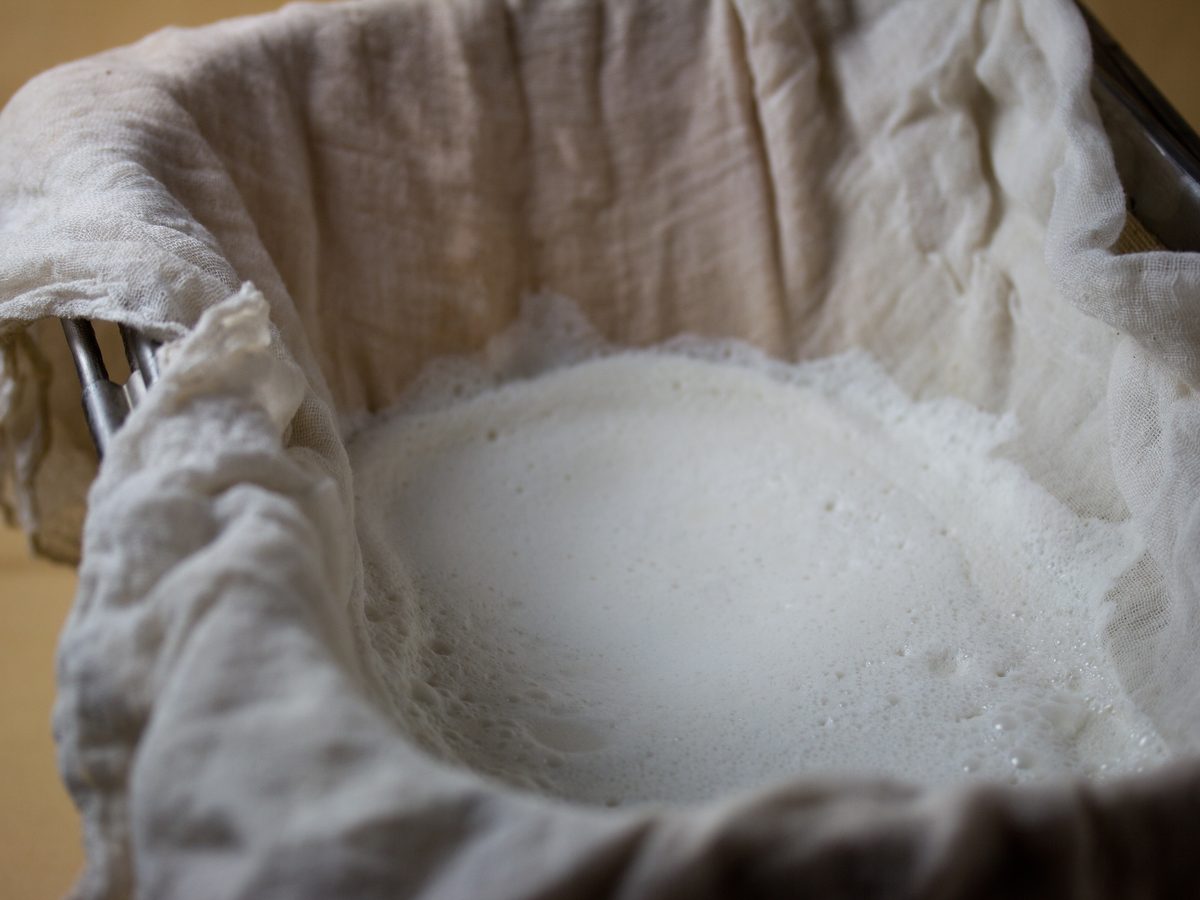
Hold the bag over a wide bowl or a jug, pour the blend in, gather the top and squeeze from the top down. A strainer over a bowl does the same with less effort and more pulp in the milk.
4
Rinse
Turn the bag inside out, knock the meal into a container (it is almond flour; dry it or freeze it), rinse the bag under the tap at once and hang it to dry. A bag left wet with meal in it is the whole reason people stop.
Quick picks
The short answer for common situations. Each links to the full card below.
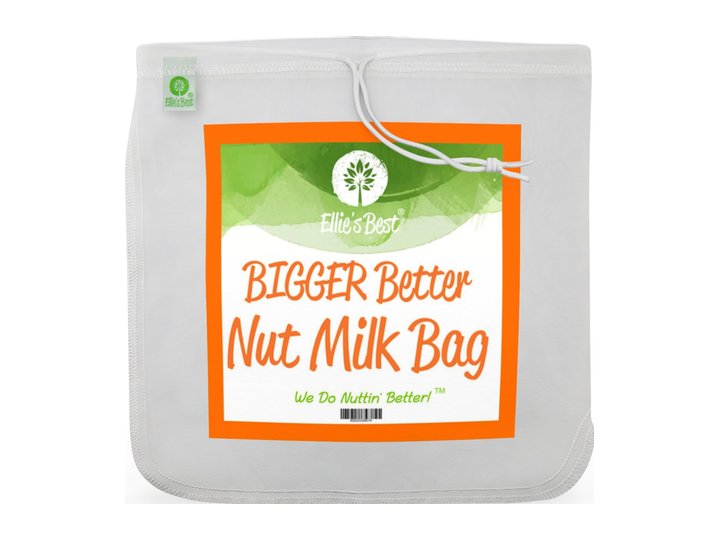
The bag most blender-route recipes assume: fine Italian nylon mesh at 200 microns, triple nylon seams, a drawstring, and a rounded bottom so the meal doesn't pack into corners. Ellie's Best says it is built for milk with no pulp in it and to be squeezed hard.
Mesh
Fine Italian nylon, 200 micron
Seams
Triple nylon
Size
12 × 12 in (listing)
Closure
Drawstring
Cleaning
Rinse and hang; hand wash
Suits: The first bag, and the one to keep as a backup when a machine arrives; also cold brew, juice and yogurt straining.
Weigh: Nylon holds smells if it is put away damp: rinse at once and hang. Ellie's Best doesn't publish dishwasher advice; retailers say hand wash.
Three bags, each a different size (8 × 12, 10 × 12 and 13 × 13 in), in food-grade nylon mesh, so one fits a single-serve jug and one takes a full blender. The second bag means one can be drying while the other is in use.
Mesh
Food-grade nylon; micron not published (listing)
Sizes
8 × 12, 10 × 12, 13 × 13 in (listing)
Cleaning
Rinse and hang; hand wash
Suits: A household making more than one kind of milk, or anyone who wants a spare.
Weigh: An Amazon-only brand with no maker page; the mesh size isn't published, and everything here is from the listing.
Glass carafe with a fine-mesh strainer insert, no bag
Chef'n Nut Milk Maker
Chef'n Nut Milk Maker, 32 oz carafe with mesh strainer
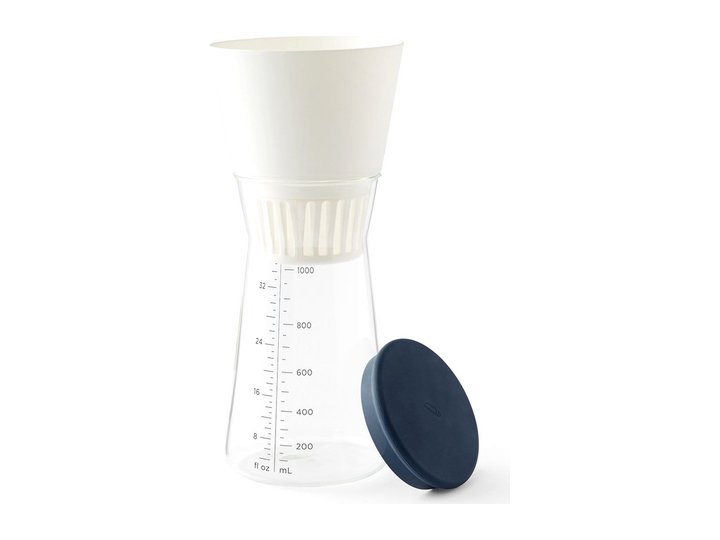
The no-bag route: a 32 oz glass carafe with measurement marks, a reusable fine-mesh strainer that sits in its mouth, and a silicone lid for the fridge. Blend, pour through, let it drain, lid on. Nothing to squeeze.
Carafe
32 oz glass with measurement marks
Strainer
Reusable fine-mesh insert
Lid
Silicone, spill-proof, for fridge storage
Cleaning
Carafe top-rack dishwasher; mesh hand wash
Suits: Anyone who would rather wait for the milk to drain than wring a bag, and wants the storage bottle in the same purchase.
Weigh: A strainer lets more fine meal through than a bag does, so the milk is a little grainier. The carafe is top-rack dishwasher safe; Chef'n says the mesh is hand wash only.
The blender route costs the least and makes the smoothest almond milk, because you squeeze harder than a machine spins. It also makes the most mess and asks for your hands every time. If you are straining more than twice a week, a no-strain machine pays back in minutes at the sink; if soy is the milk, a heated maker cooks it, which a blender never will.