No-strain milk makers: cold almond and cashew milk with nothing to wring
A no-strain machine is a blender turned inside out. The nuts sit in a filter basket, water is pulled through them and spun, and milk collects below while the meal stays in the basket. Nothing gets squeezed and there is no cheesecloth in the sink. They make cold milk only, which suits almond, cashew, coconut and hemp and rules out soy, which has to be cooked. They cost the most, and they are the ones people keep using.
Two machines, and the ones that left
Both keep the meal in a basket and the milk in a jug; the difference is how they spin it out and how long they are built to last. Which milk maker do I need? has the long version.
Basket on a base
Almond Cow
A stainless filter basket hangs from the motor head into the jug; nuts in the basket, water in the jug, one button, and the head spins milk out of the nuts in about a minute. Up to 1.5 L a run, 4.6 lb, one-year warranty.
Blend, then spin
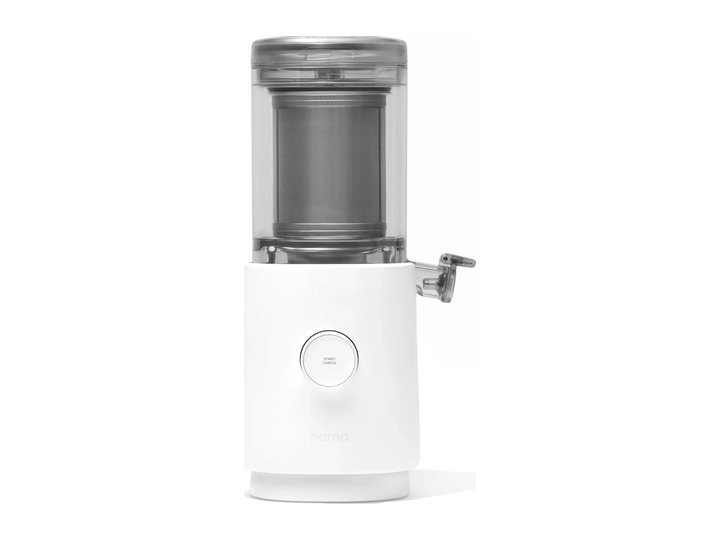
Nama M1
A Tritan chamber with a basket and a blade; a knob sets the blend time, then a spin cycle wrings the liquid out of the pulp and a spout decants. The pulp lands in a sealed pouch. Heavier, 600 W, 15-year warranty.
Not on Amazon
The ones that left
Milky Plant sells its Plus direct from the UK only; the NutraMilk processor and the Nutr Machine have no stock and their makers' sites have gone. We only list what you can buy today, so they are not on the cards.
Quick picks
The short answer for common situations. Each links to the full card below.
Nama's milk maker: a knob for blend time, an automatic spin cycle that wrings the pulp, a pouch that catches it, and a 15-year warranty.
Compare the two
Batch size, cycle time and materials from each maker's page where it publishes them; anything taken from the retail listing says so. Heats means the machine can cook or warm the milk, which none of these do by design.
Product links on this page go to Amazon. If you buy through them, Milk the Nut earns a commission. How we pick and earn
The machine that made the category: a cup of nuts goes in a stainless filter basket under the motor head, water in the jug, and one press of the cow button spins a pitcher of milk out in about a minute, by Almond Cow's account. Soaking is optional, there is no bag to wring, and nothing heats. The meal stays in the basket and comes out as almond flour.
Batch
Up to 1.5 L, about 5 to 6 cups; dry ingredients to the 1-cup line of the basket
Cycle
About one minute ("Fresh in 60 Seconds"); soaking optional
Programs
One cold cycle, one button; no heating
Touches the milk
304 stainless interior (international page); "food-grade stainless steel and plastic" (US page)
Motor
240 W, 120 V; Almond Cow says 10,000+ rpm
Size
12 × 9.5 × 6.5 in; 4.6 lb
Warranty
1 year, parts and motor
Suits: A household that drinks almond, cashew or oat milk daily and wants the biggest cold batch with the least handling.
Weigh: It makes cold milk only, so soy has to be cooked afterwards on the stove. Almond Cow's own pages disagree on which parts are dishwasher safe (the filter basket on one, all removable parts on another); plan on hand washing. One-year warranty.
Nama's milk maker from the people behind the J2 juicer: a filter basket in a Tritan chamber, a knob for blend time (creaminess), then a spin cycle that wrings the liquid out of the pulp on its own, and a spout to decant. Nama calls it Blend + Strain; the pulp lands in a fold-to-seal pouch, so there is nothing to scrape. Nama says no soaking is needed; there is no bag and nothing heats.
Batch
Not published by Nama; about 32 oz / 0.9 L (reviews)
Cycle
Blend time set by the knob, then an automatic spin cycle; about two minutes (reviews)
Programs
Adjustable blend, auto spin, spout to decant; no heating
Suits: Anyone who wants control over texture (the knob sets how long it blends) and a machine built to last: Nama publishes a 15-year warranty on all parts.
Weigh: Nama publishes no batch size or cycle time; reviewers report about 32 oz and about two minutes. The chamber is Tritan, a plastic, if that matters to you. No heating element, so soybeans must be fully cooked before they go in (Nama's support page says so). Hand wash with the included brush.
Every no-strain maker says "milk in a minute" or close to it, and for almond and cashew the cycle really is short. What the minute leaves out is the soak: most makers recommend soaking almonds for several hours or overnight for a smoother milk, and the cards say what each one publishes. Yield claims ("a cup of nuts makes five cups of milk") describe a ratio you choose, not a property of the machine; more water makes thinner milk in any of them.
The claims that are checkable are on the spec sheets: batch size, cycle time, what the filter and jug are made of, which parts go in the dishwasher, and the warranty. Those are what the cards above quote, with the source named. None of these machines heat, so none of them makes soy milk safely; that is the heated page.